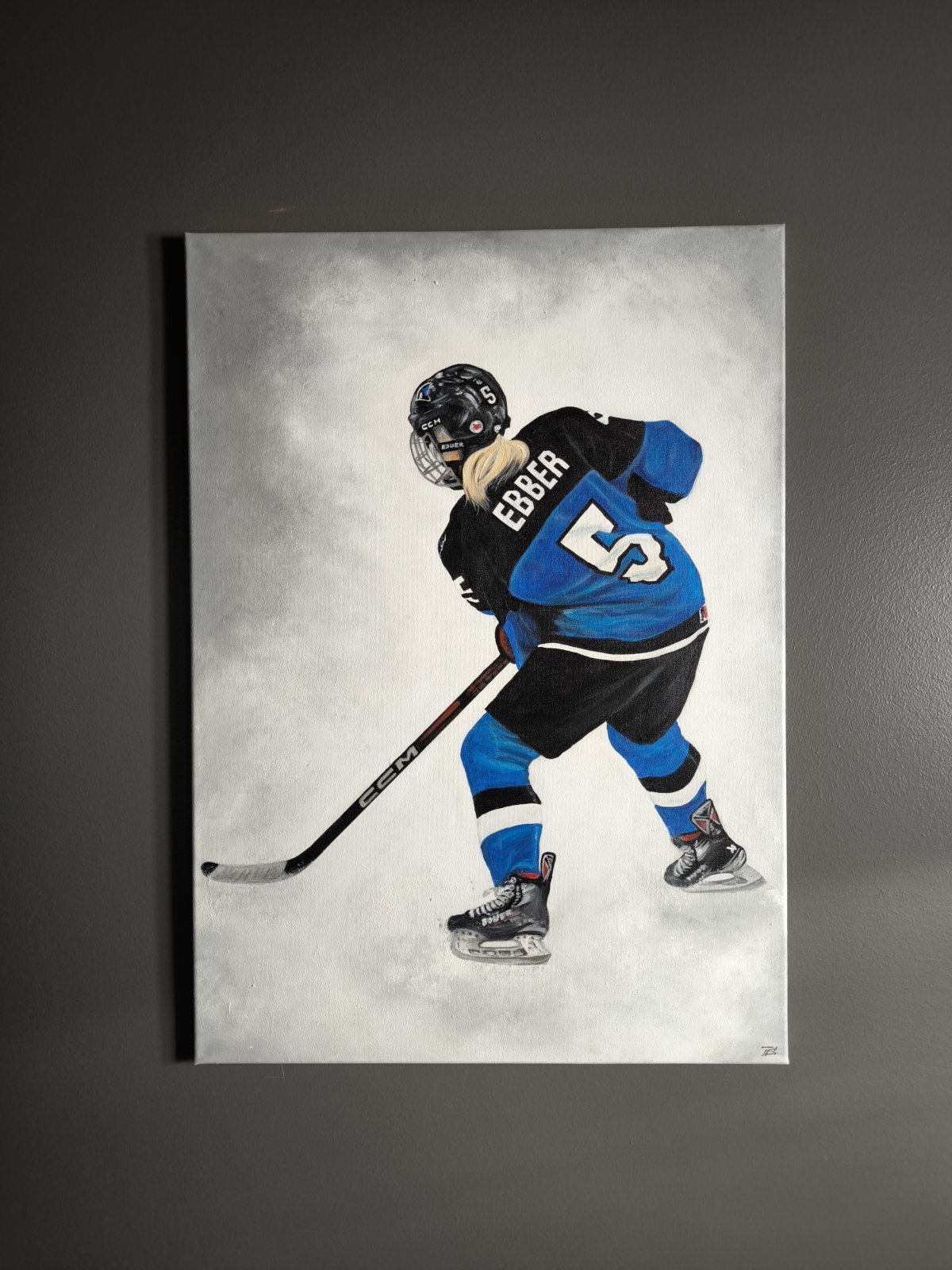
A painting based on a photo does not therefore have to be an exact copy. The photo may serve as a very precise reference, but it can equally convey only the person, place, colour palette or mood from which the painting develops.
What does turning a photo into a painting involve?
When a painting is commissioned from a photo, one or more photographs are used as visual reference material. A photo can provide information such as the subject’s shape, facial features and proportions, as well as the lighting, colours and other details.
Before work begins, it is helpful to consider which aspect of the photo matters most to the client. In some cases, a particular person or object needs to be recognisable. In others, the atmosphere, colour palette or memory represented by the image may be most important.
The clearer the client’s wishes are, the easier it is for the artist to assess the role the photo will play in the finished work.
Does the painting have to be an exact copy of the photo?
Not necessarily.
A painting can follow a photo very closely, but an artistic work also allows details, the background, colours or the overall composition to be changed or simplified. The exact approach depends on the artist’s style and what is agreed before work begins.
It is therefore helpful to distinguish between two different wishes when making an enquiry:
- reproducing the visual content of the photo as accurately as possible;
- using the photo as inspiration or a starting point.
These are different briefs.
If the main aim is to capture the atmosphere or memory associated with the photo, the artist may have more freedom to interpret the composition and colours.
What makes a suitable reference photo?
A good reference photo does not necessarily need to have been taken by a professional photographer. What matters more is that it contains enough visual information.
It helps if:
- the main subject is clearly visible;
- the photo is not heavily blurred;
- important details are not completely in shadow or overexposed;
- the face or other important subject is not very small;
- the original file is, where possible, of better quality than a reduced copy saved from social media.
This is particularly important if recognisable facial features or other small details need to be preserved in the painting.
However, a lower-quality photo is not automatically unusable. An old family photo, a snapshot taken on a phone or a small archival image may be highly valuable to the client. In this case, it is simply best to ask before commissioning the work whether the photo contains enough information to achieve the desired result.
Can several photos be used?
Several photos can often be useful.
One might show the face clearly, another the posture, and a third the colours or surroundings. Having several photos helps the artist form a better overall understanding of the subject.
This does not automatically mean that elements from different photos can always be combined into one composition without difficulty. The photos may have been taken from different angles and with different lighting and perspective.
If elements from several photos are to be combined, this should be stated clearly before work begins.
What can be changed in a painting based on a photo?
This depends on the individual artist and the nature of the work, but the commission may involve discussing:
- simplifying the background;
- removing unnecessary elements;
- changing the colour palette;
- cropping the composition;
- changing the painting’s format;
- emphasising a particular detail;
- changing the overall mood.
No changes should be assumed to be included automatically. They should be agreed before work begins.
Size and format affect the result
The aspect ratio of the photo and that of the desired painting may not be the same.
For example, a vertical phone photo may be a natural starting point for a portrait-format work, but adapting the same subject to a wide, horizontal painting requires a change in composition.
Before commissioning the work, it is worth deciding at least approximately:
- how large the wall is where the painting will be displayed;
- whether a vertical, horizontal or square format is preferred;
- how much free space will remain around the work;
- from what distance the painting will usually be viewed.
You do not always need to know the exact size yourself. The choice can be based on both the available wall space and the nature of the subject.
How to choose the size of a commissioned painting
Copyright and the right to use an image
The situation is usually simpler when the reference is a photo taken by the client or one of the client’s personal photographs.
If the intention is to use a professional photo found online or another creator’s work, copyright must be taken into account. The fact that an image can be viewed online does not automatically mean that it may be freely used as the basis for another work.
If in doubt, use your own photo or material that you have permission to use.
What should you include with a commission enquiry?
A good initial enquiry does not need to be long.
It is useful to include:
- the reference photo or photos;
- the desired or approximate size;
- where the painting is intended to be displayed;
- which part of the photo is most important;
- whether you want a close interpretation of the photo or a freer approach;
- any important preferences regarding colour or composition.
It does not matter if you do not yet know every detail. The purpose of the first enquiry is to provide enough information to assess whether the idea is feasible and to clarify the next steps.
Checklist before commissioning a painting from a photo
Before sending an enquiry, check:
- Does the selected photo clearly show what needs to be important in the painting?
- Is the original photo file available, if possible?
- Do you want an accurate or a freer artistic interpretation?
- Should any part of the photo be removed or changed?
- What size and format might suit the work?
- Do you have the necessary rights to use the reference photo?
The most important thing is to give the artist as clear a brief as possible. A good reference photo helps, but it is equally important to explain what you value about that particular image.